
Nobleza 33 Reposado (40%)
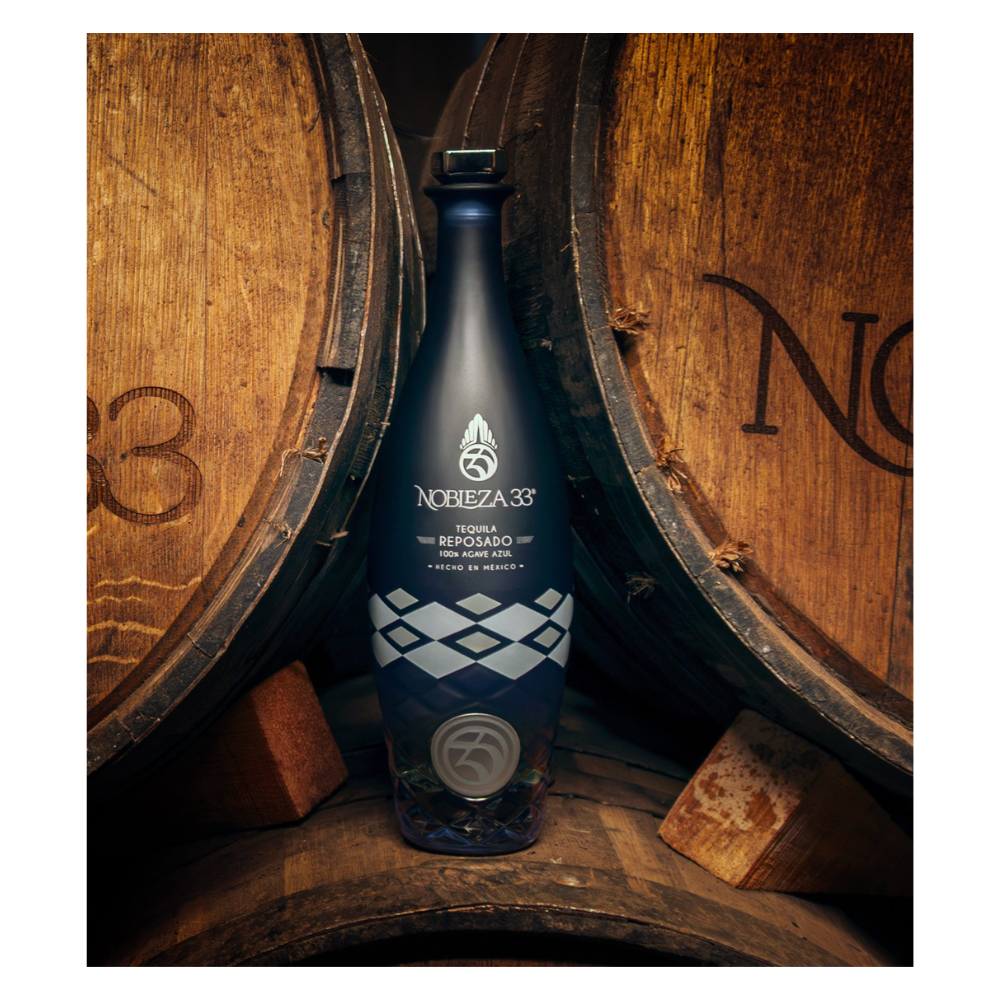
If you are of the sort to pay attention to controversies in beer, wine, and spirits, you’ll know that tequila is very much in the news these days, and not for the right reasons. At issue are the abocantes, or allowable additives the Tequila Regulatory Council (CRT) permits in tequilas. Typically oak extracts or caramel colouring, and sometimes mouthfeel-enhancing additives such as glycerin or sugar syrups, these ‘extras’ do not need to be declared on the label, and so far as they do not exceed 1% of the total volume, are perfectly legal.
(Note #1: Tequila is not alone in this regard. Additives are commonly allowed and used in any number of spirits, including caramel colour in Scottish single malt whisky and glycerin in vodka.)
(Note #2: The abocantes controversy is entirely aside from recent allegations that certain brands are using non-agave derived alcohols in their 100% blue agave tequilas. To my knowledge, no such allegations have as yet been proven in court.)
In this context, it is even more heartening to find tequila producers who still do things the right way, eschewing many more modern conceits to focus on the quality and integrity of their spirits. Like the El Pandillo distillery of Los Altos de Jalisco.
Maker of the Nobleza 33 and G4 families of tequilas, El Pandillo’s master distiller, Felipe Camarena, does several things differently from most and it shows in his spirits. First, he collects rainwater during the rainy season and combines it with spring water for the G4 line, employing instead deep well water for the Nobleza 33 tequilas. “Change the water and you have a different profile,” he says, and he’s quite right.
Secondly, the distillery requires higher than usual Brix levels in its agaves, 30º rather than the more common 24º or 26º. (Brix indicates the degree of sugar in the fermentable material.) Then, for the Nobleza 33 line, Camarena conducts two separate fermentations, one of the conventional agave liquid and the other of that liquid combined with the macerated fibres of the agave, both using wild yeast.
These fermentations are long, taking about 100 hours each, and are then distilled separately before the results are combined for aging at a ratio of 95% conventional and 5% fibre. This blended tequila is then aged 90% in former bourbon barrels and 10% in red wine casks.
After all this, the resulting reposado is light gold in colour with a unique aroma that is a little wild and a little funky, with overripe fruit led by mandarin orange, cooked agave, cooked vanilla, and light oak. What is most intriguing, however, is that faint funkiness, which conjures notions of orange juice that has been left to begin fermentation, a light hint of bloomy cheese rind, and just a suggestion of barnyard, all in a very, very good way.
The palate entry has a soft sweetness, equally of dark honey and light toffee, with hints of toasted hazelnut and almond, leading to a funky, oaky, agave-led mid-palate supported by mild to moderate caramel and vanilla notes and hints of cooked pear and apple. The finish is the place on the palate where the wild fermentation shows most, with a lingering fermented agave and oak character. Overall, the full palate experience is quite creamy, never overly sweet, and smooth without being at all boring.
This is reposado taken to a new level, somewhat wild and unrestrained, yet with demonstrable artistry and craftmanship. A simply wonderful sipping spirit.
95 ($115 - $140)