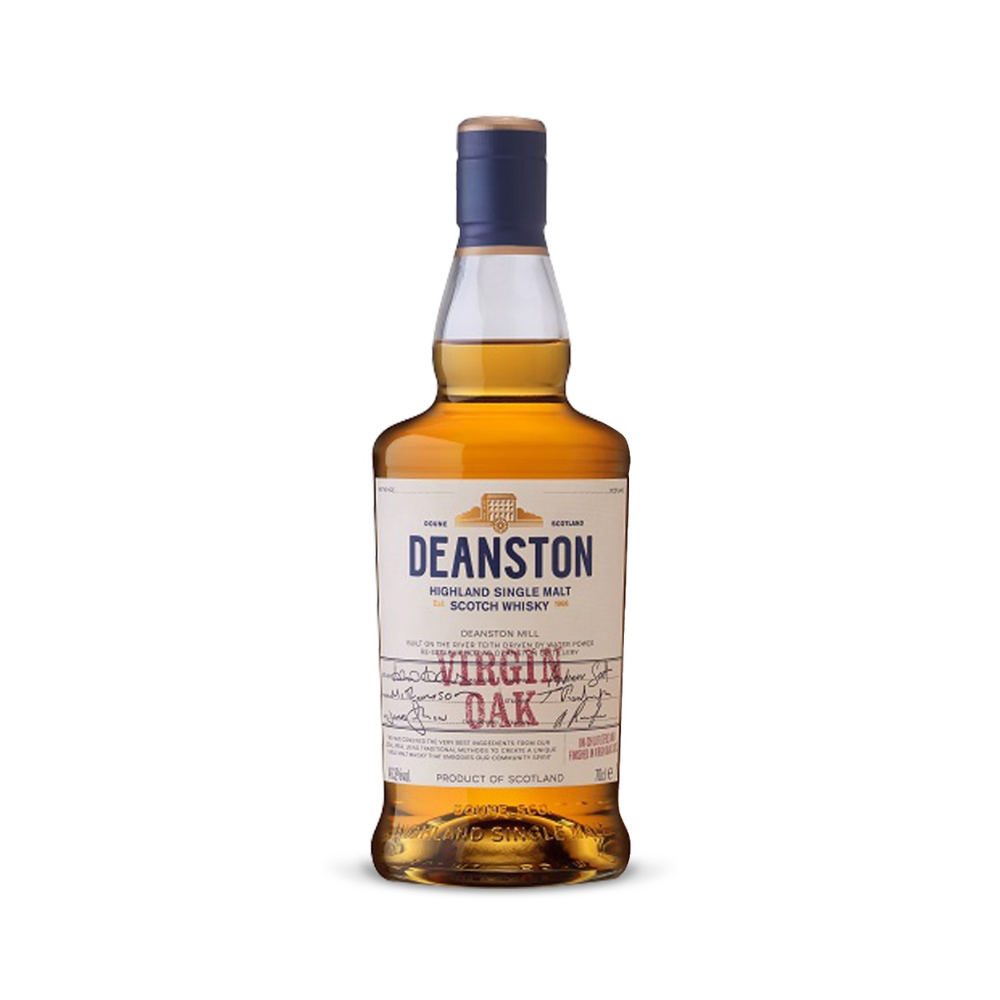
Deanston Highland Single Malt Virgin Oak (46.3%)
(This Sunday is Robbie Burns Day, and for those seeking to economize on their celebrational whisky purchases, I have uncovered a bit of a gem! Read on for more…)
I have a confession to make: Until I bought this bottle, I was rather unfamiliar with Deanston. I mean, I’d heard of the distillery, knew that it was a significant stablemate of Bunnahabhain in the CVH Spirits company, but for the life of me I couldn’t recall having sampled any of the company’s expressions. A combination of a bunch of 90+ point reviews at Whisky Advocate and a $60 price tag at the LCBO, however, was enough to convince me to give it a shot.
Unlike so many storied Scottish distilleries, Deanston does not boast centuries or even all that many decades of history, having been established in a former cotton mill in the mid-1960s. (The mill’s turbines allow the distillery to be entirely energy self-sufficient, something esteemed whisky writer Dave Broom notes the distillery should perhaps trumpet a bit more loudly.) Located just 14 or so kilometres north of Stirling, it is set in the southern Highlands on the River Teith, which provides not just power, but also the water used in the whisky.
According to Broom in the third edition of The World Atlas of Whisky, this particular expression of Deanston became somewhat of a cult classic during the pandemic, used as the base of a Scotch Old Fashioned. Thus far I have only tried it neat, but fully intend to explore its cocktail side further in the future.
While the use of virgin oak is relatively common in Canadian and American whiskies, it is much less so in Scottish, principally due to the difficulty of controlling its oft-intense impact upon the spirit. But as Deanston is said to be the producer of a fruity whisky with more than adequate weight, my hope when approaching this was that it would be possessed of sufficient heft to balance the wood.
First impression when nosing this whisky is that my hopes have been met, with no overabundance of wood or vanilla apparent. Instead, I get honeycomb, Granny Smith apple, hints of dried and canned peaches, and a touch of bee’s wax candles. The distillery is one of two in Scotland said to produce a ‘waxy’ style of whisky, the other being Clynelish, so the bee’s wax reference is not as odd as it may seem, and if fact may be a big part of what keeps the virgin oak in check.
On the palate, this continues from strength to strength, with an entry that is full without being overly assertive, bringing vanilla and caramelized peach, honey and a bit of macadamia nut. The mid-palate adds even more fruit with fresh pear and candied apricot, a touch of peppery spice, vanilla cookies, and hints of charred wood. The finish dries nicely, leaving behind lingering brown spice and oak.
From not knowing exactly what to expect, I have in three tasting sessions become a fan of this distillery, and if this is what they can do with no age statement virgin oak, I am excited to taste their age statement and cask finished whiskies. Until that time, however, I’m more than content to sip on this perhaps underappreciated delight.
91 ($50 - $60) VALUE PICK