My first visit to the Achel monastery on the Belgian-Dutch border was in the late 1990s, not long after the monks there commenced brewing, or should I say recommenced, brewing having been a part of monastic life at the abbey until World War I. The beers back then, as developed by Brother Thomas, recently retired from overseeing the brewery at Westmalle, were not the typical Trappist fare, but rather a low alcohol blonde and slightly stronger golden and brown ales.
As the abbey restaurant was a common stop for recreational cyclists, Brother Thomas’ theory was that it would be best to brew refreshing, quaffable beers rather than high-strength dubbels and tripels. And for the purposes of the café, he was right, but it wasn’t long before Achel started brewing much higher alcohol beers for bottling, retailing, and export.
This arrangement lasted until 2020, when the last two brothers left the abbey and it was decommissioned. Enter Jan Tormans, who was the consensus pick of the monastery’s keepers to take over the buildings and brewery, thus giving Achel a second, non-Trappist life.
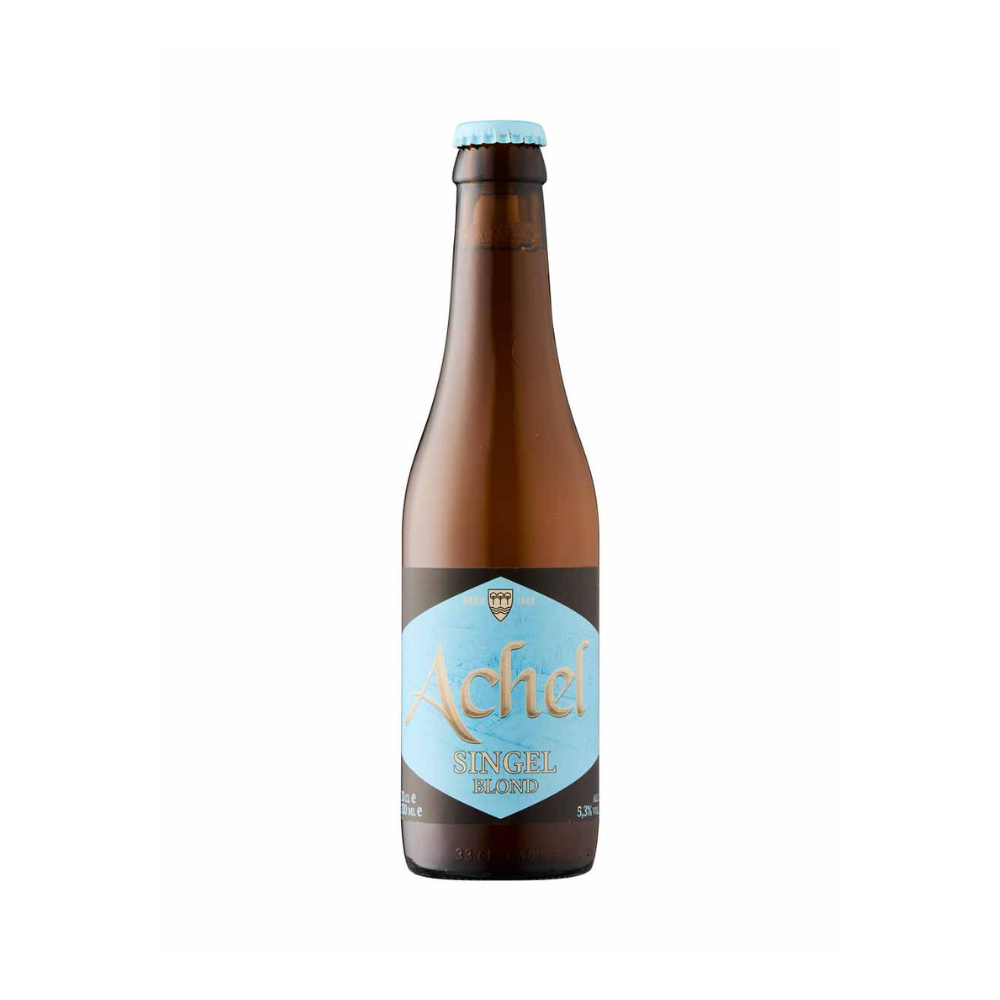
The brewery now makes a Singel, Dubbel, Tripel, and Quadrupel, the last in both dark and golden versions. Additionally, there are a Rouge Légère, flavoured with real cherry juice, and a Wit, plus a Grand Cru and seasonal Winter Ale. While it is to be hoped that in due course we will see more of the brewery’s beers in Canada, for now there is just the Singel and Dubbel and a small handful of remaining bottles of Tripel.
Pouring with a slight haze from the bottle-conditioning, the Singel has a medium gold colour with a generous and fairly lasting collar of white foam. The aroma carries a fair amount of fermentation-derived fruitiness, particularly notable given its modest strength, with pear, spicy orange peel, and hints of nectarine and dried apricot. This all coexists nicely with a floral maltiness and a curious hint of cardamom.
The palate entry is soft and gently floral, with some light pear and peach notes. On the mid-palate, these fruity notes grow keener, spicier, and drier, with more stewed pear and dried stone fruit evident alongside a vanilla-caramel maltiness and soft notes of coriander, cardamom, and white pepper. That spice lingers on the finish with a very gentle hop bitterness, creating a rather refreshing conclusion to a beer which, at first sniff and taste, would seem to be more satiating than quenching.
While Belgium is obviously best known for stronger or more singular beers, from dubbels and tripels to Flemish red ales and lambics, the singel is the largely unsung hero of the abbey-style ale family, and of that this is a most convincing example. While lovely on its own as an afternoon quencher – certainly far superior in that regard to the sort of Belgian lagers that spin false histories and rely on fancy glassware for notability – it is at its best with a modest lunch of meat, cheese, and bread, or perhaps a plate of raw and cooked seafood.
88 ($4.25)